Counter Culture: Why Tuli Sa’s Next Visual Should Be Shot Between the Meal Deal and the Mop Bucket

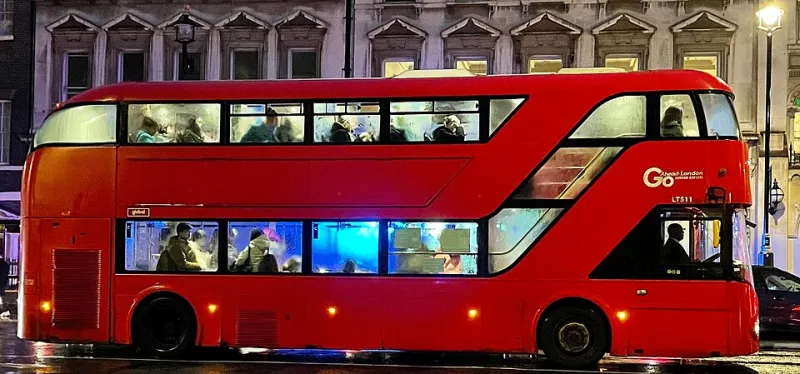
Photo: Humphrey Bolton , CC BY-SA 2.0, via Wikimedia Commons
There’s a particular shot that keeps turning up in pop videos like a bad penny: the rooftop. Artist stands near a ventilation unit, city lights blur behind them, coat billows, drone swoops. It’s fine. It’s also as predictable as a bus that says ‘Sorry, Not in Service’.
So here’s a pitch for Tuli Sa’s next visual: ditch the skyline. Book a corner shop.
Not a stylised, art-directed corner shop with hand-lettered signage and a single artful aubergine. A real one. Fluorescent strips, a chiller cabinet that hums in B-flat, shelves stacked with things you forgot existed, and a shopkeeper who has seen everything and is impressed by none of it. That’s the set.
The rooftop problem
Rooftop videos are the musical equivalent of a LinkedIn motivational post: technically impressive, emotionally thin. They suggest scale without saying anything. A corner shop says something immediately — about place, about class, about the specific texture of British everyday life.
Tuli Sa’s music already trades in small details. The best bits of the catalogue are the lines that sound like overheard conversation, the beats that click like a turnstile. A corner shop is the visual version of that instinct. It’s intimate, a bit grubby, and instantly recognisable.
Plus, budget. A rooftop in central London costs more than some people’s rent. A corner shop in, say, Leeds or Cardiff or Croydon will let you shoot for the price of a few crates of fizzy pop and a promise to mop up afterwards. Low budget isn’t a limitation if you make it the aesthetic.
A set you already know
The genius of the corner shop is that everyone in the UK has a version of it in their head. The bell above the door. The lottery ticket display. The rack of birthday cards for people you forgot about. The wire stand of knock-off phone chargers. The fridge with the meal deal and the one sad salad that nobody ever buys.
For UK fans, that’s not just a backdrop. It’s a memory. It’s the shop you nipped into after school for a Freddo and a scratch card for your nan. It’s the one that stayed open during the snow. It’s a space that feels like a community living room, only with more mops and less small talk.
Dropping Tuli Sa into that environment creates an instant visual language. The artist doesn’t have to explain where they’re from or who they’re speaking to. The shelves do it for them.
Comic timing comes free
A corner shop is basically a sitcom set that happens to sell milk. You’ve got the shopkeeper — cast a real one, not an actor — standing behind the counter with the energy of someone who has watched the world fall apart and still has to restock the Quavers.
The gags write themselves. Tuli Sa tries to pay for a single banana with a contactless card and the machine says no. The shopkeeper stares. The queue of one — an older gentleman buying a paper and a tinned pie — sighs audibly. A cat walks across the counter like it owns the place. The fluorescent light flickers every time the bass hits.
These aren’t slapstick moments. They’re character moments. They give the video warmth and a pulse. They also give Tuli Sa something to react to, which is infinitely more interesting than staring moodily at a drone.
Style on a shoestring
Here’s the thing about low-budget visuals: they only look cheap when they’re trying to look expensive. A corner shop video should lean into its own grain.
Think handheld camera, slightly too close. CCTV angles cutting in like a documentary. Fluorescent green cast on the skin. A whip-pan to a shelf of tinned beans. The mop bucket in the corner that becomes a recurring motif. Use the shop’s own lighting — it’s unflattering, which makes it honest, which makes it cool.
The styling can be sharp without being flashy. Tuli Sa in a clean tracksuit against a wall of faded crisp packets. A long coat and trainers, browsing the freezer section like it’s a runway. The contrast between the artist’s polish and the shop’s chaos is the entire point. It’s funny, it’s stylish, and it costs less than a drone permit.
A UK-specific pop moment
There’s a long tradition of British pop culture finding beauty in the mundane — the bus stop, the launderette, the kebab shop at 2am. The corner shop is part of that lineage. It’s a space that’s been in our songs, our sitcoms, our group chats. It’s where you bump into your mate’s mum and have to explain why you’re buying three energy drinks at 11pm.
For Tuli Sa, a corner shop video would be a statement of intent: we’re not chasing an international skyline, we’re claiming our own high street. It says the music belongs to real places, real people, real fluorescent lighting. It also gives fans a visual they can point at and say, ‘That’s my shop. That’s the one on the corner of my road.’
That kind of recognition is worth more than a thousand drone shots.
The pitch: 90 seconds in a shop
Picture it. The video opens with the bell above the door. Tuli Sa walks in, hood up, dribbling a basketball that immediately rolls under a shelf. The shopkeeper doesn’t look up. The beat drops as Tuli Sa starts browsing — not dramatically, just genuinely looking for a snack — while the camera catches fragments of the shop: the scratch card display, the mop bucket, the cat.
Chorus one: Tuli Sa mimes the lyrics to the shopkeeper, who responds with a deadpan shrug. Cut to a wide shot of the two of them standing either side of the counter like it’s a standoff in a Western. Cut to a close-up of a Freddo with a price tag that says 25p, which is a joke for the real ones.
Bridge: Tuli Sa and the shopkeeper do a synchronised dance move with a mop and a broom. The cat watches. The fluorescent light flickers.
Final chorus: the shop starts to fill with fans — not a mob, just a handful of locals — all doing the hook. The shopkeeper finally cracks a smile, hands Tuli Sa a meal deal, and turns the sign on the door to ‘Closed’.
The end. No rooftop. No skyline. Just a proper little shop, a proper little moment, and a video that will live in group chats for months.
That’s the move. Tuli Sa, if you’re reading: the corner shop is ready when you are. Bring a mop.