House Lights, Hands Free: Staging Tuli Sa’s No-Screen Finale Without the Guilt Trip
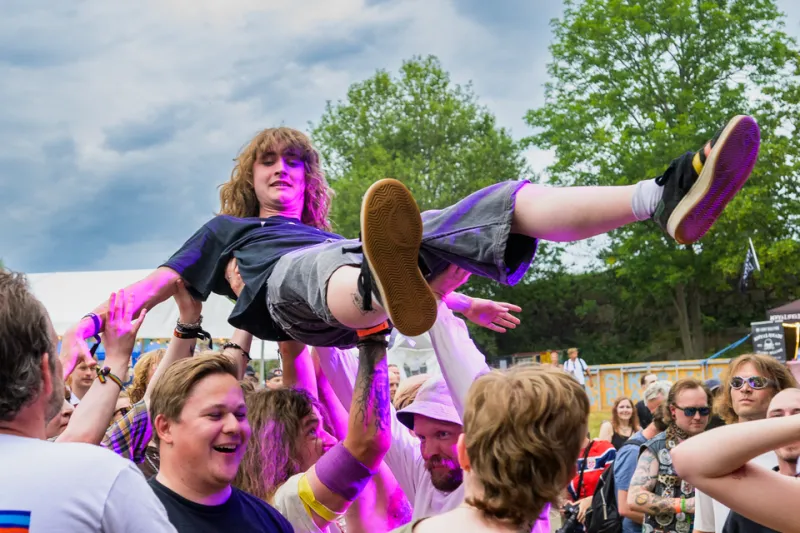
Photo: Birgit Fostervold, CC BY-SA 4.0, via Wikimedia Commons
There’s a particular sound a room makes when nobody is filming. It’s louder, for a start. The last chorus of a Tuli Sa set — the one where the band pulls back and lets the crowd take the melody — currently arrives with a few thousand small rectangles raised in tribute. What you hear underneath the singing is the soft clatter of people checking whether the take is still running.
That’s not a scandal. It’s just a slightly worse version of a very good moment. And it’s fixable, provided nobody reaches for the pouch.
Why the Heavy-Handed Route Is a Non-Starter
The obvious model is the locked bag. You’ve seen it at comedy nights and the odd arena show: queue up, hand over your mobile, receive a padded case and a look of mild suspicion. It works, technically. It also sets the tone for the entire evening before a single chord has landed, and it recasts a Tuli Sa gig as a compliance exercise.
There’s a practical cost, too. Pouch systems slow entry, eat staff time and generate a queue at the end of the night that nobody wants to be standing in when the last train out of Leeds is at 23:40. For a tour built on word-of-mouth goodwill, that’s an expensive way to buy four minutes of attention.
What the Room Actually Gains
Strip the phone out of the final chorus and three things happen at once. The crowd sings louder, because there’s nothing to split their attention. The band hears it, which changes how they play the outro — Tuli Sa has always pushed the last bar a touch further when the room is with her. And the footage that does exist, shot properly by the tour’s own team, immediately becomes the best version on the internet.
That last point is the whole trade. Fans give up a wobbly, over-the-shoulder clip; they get a multi-camera, properly mixed recording of the same song, posted within a couple of days. Most people will take that deal happily, as long as it’s offered as a swap rather than a rule.
The Three-Cue System
A soft ask only works if everyone knows it’s happening. Three cues, in this order, do the job without a single announcement over the tannoy.
Cue one — the screen. At the top of the encore, the back wall shows a simple graphic: a phone with a line through it, held for two seconds. No slogan, no voiceover. The audience reads it, murmurs, and understands.
Cue two — the line. Tuli Sa says it out loud, once, lightly. Something in the region of: “Last one. I’ll give you the chorus — you give me your eyes.” It lands as charm, not instruction, and it’s over in five seconds.
Cue three — the band. Crew off their phones. Photographers out of the pit for that song. The lighting desk drops to a warm, wide wash rather than the tight strobes, so the room looks like a room and not a light show designed for a screen. If the artist’s own people are filming, the audience notices — and the ask collapses.
Signage That Doesn’t Nag
One A3 card at the merch desk. One slide on the pre-show loop, buried between the tour dates and the mailing list QR code. That’s the entire signage budget. Anything more starts to feel like a school assembly, and the fastest way to make a British crowd film something is to put up a sign telling them not to.
Wording matters more than placement. “Last song: hands, not screens” reads as an invitation. “No filming” reads as a challenge, and someone in the balcony will accept it.
The Pledge, Not the Police
A phone-free moment works best when it’s opt-in and visibly so. A line on the tour page, a card tucked into the merch bag, a coloured wristband handed out at the door for anyone who fancies joining in — none of it compulsory, all of it legible across a packed floor. The wristband is doing quiet heavy lifting here: if a third of the room is wearing one, the norm spreads sideways through the crowd rather than downwards from the stage.
What you don’t do is send stewards into the aisles. Nobody should be tapped on the shoulder for holding a phone. One enforcement incident — one — and the entire idea becomes a story about being told off at a gig.
The Accessibility Caveat, Stated Plainly
Some people need their phone. Lyrics, live captioning, medical apps, a message to the person they came with. The ask has to be genuinely soft, and Tuli Sa should say so out loud before the song starts: “If you need your phone, keep it — this is just an invitation.” That single sentence removes the guilt, protects the moment, and costs nothing.
One Song Is the Whole Point
Four minutes. That’s the window. Not the encore, not the last twenty minutes, not a holier-than-thou stance on modern gig-going. Just the final chorus, held once, with everyone in the room pointed at the same thing.
The clip you’d actually want to watch back isn’t the one you’d take anyway. It’s the one where the crowd noise swells and the band leans in, and for once nobody’s checking whether it landed. Pocket the pixel for one song in 2026 and the rest of the night can stay exactly as it is.